

FRISCO, TEXAS – Winter break is around the corner, meaning a whole semester of high school has blown by. During that time, a range of students have been experiencing their firsts; from the freshmen’s first year of high school to the seniors submitting their first round of applications in the fall, something new is happening all the time.
Typically, throughout the years, students have been able to use their phones, talk to their friends, and find where they are around the school. With almost all students taking pictures or videos as precious memories to look back on.
A new bill changed all that.
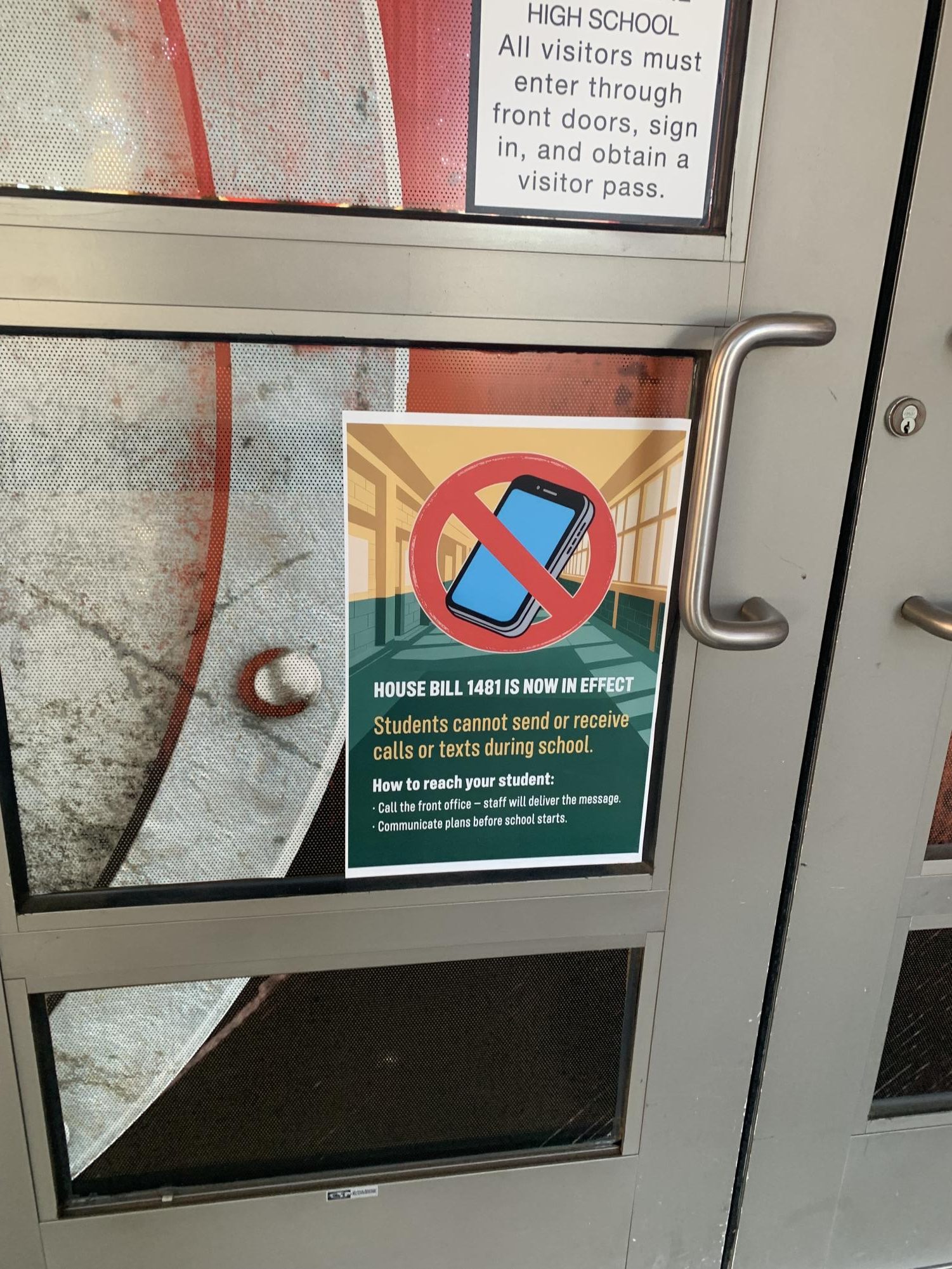
House Bill 1481 was first passed by the House of Representatives on April 24, 2025, then passed by the Senate on May 25, 2025, and finally signed into law by Gov. Greg Abbot on June 10, 2025. This bill was then put into effect in all Texas schools at the beginning of the school year, banning all personal wireless communication devices.
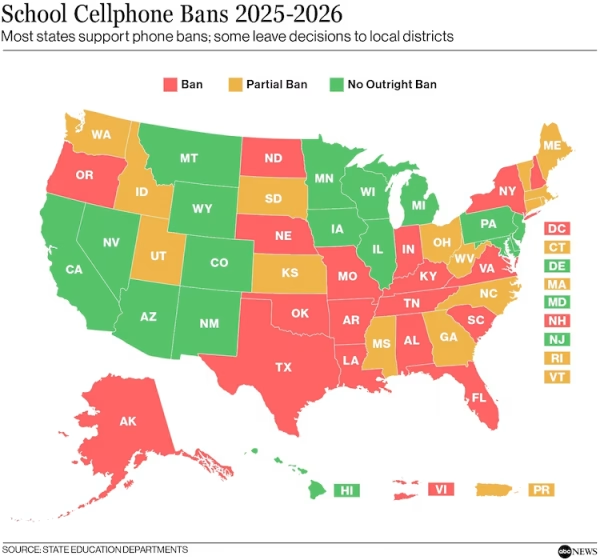
Currently, in December 2025, 26 states, including Washington D.C., have also implemented the ban.
This was a huge change for not only students, but also for teachers and administrators who, after COVID-19, spent the past five years building their curriculum on the usage of personal devices such as phones.
“It was more efficient to take pictures, and students can’t use QR codes to do assignments like before,” Advanced Placement (AP) European and United States History teacher, Joseph Richards, remarks, “Spending years implementing students’ devices into coursework to not at all is a pretty big change.”
Classroom style isn’t the only thing that has changed, as students’ lifestyles are completely different now. Before, students were able to text their friends and coordinate with them from across the school. Now, it has become more difficult to talk to your friends, especially for friends who don’t have any classes together.
Seniors have been hit especially hard by this change. Students usually spend their final year documenting the remainder of their high school journey, taking videos and pictures with people they know. With this new change, seniors now don’t have the ability to look back on their time in high school. Senior Aaheli Patel shares her thoughts on her lack of any way to document her last year of high school.
“It really limited my freedom a lot. I’m not able to capture the memories I wanted my senior year. Because usually, I would vlog, make videos, or make Tik Toks with my friends, but now, I can’t.”
However, some students have found that not having their phones has led to a positive impact on their education. They have reported feeling more attentive to their school work and even meeting new people.
“I obviously miss my phone,” Sophomore Maren Mazzola comments, “But I’ve actually met so many people in my other classes, and I’ve really started to actually enjoy group work, which I didn’t before because I didn’t know anyone.”
Even the staff of Centennial have seen positive changes in their classrooms compared to their previous years of teaching. Algebra 1 and Calculus BC teacher Brianna Zinecker comments on how her students have changed.
“I think it’s helped the students unplug from the worries on their phones, and really appreciate the people and things around them in the moment. I’ve seen students I would have never expected actually talking to each other.”
People’s views on the ban truly depend on their personal experiences. Some people find it a nuisance and hindrance to their everyday life, while others might see it as a way to better themselves. However, no matter who the person is, this phone ban affects everyone in the United States.